
Our story

From Katanga to Kamusongolwa

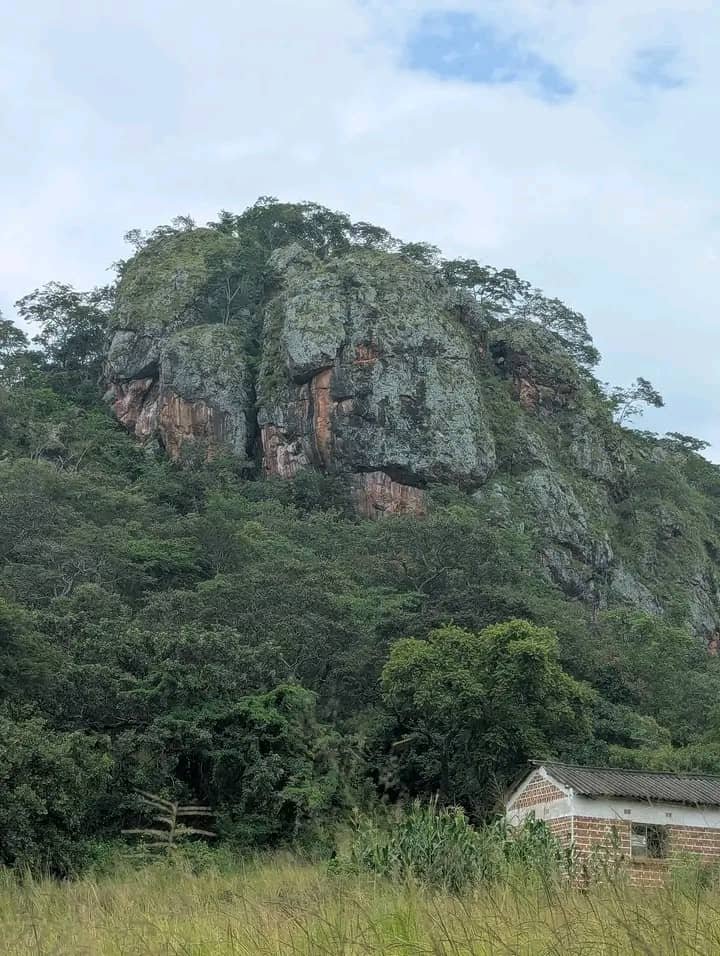
The Kaonde trace their descent from the Sanga chiefdom of southern Katanga. Their journey ends, and their capital begins, on a hill in the middle of what is now the Kasempa Chiefdom.

Part one

From Katanga to Kamusongolwa

The Kaonde trace their descent from the Sanga chiefdom of southern Katanga. Known first as the Batumba, the rain-water clan, they took the name Bena Kyowa — the mushroom clan — before turning south. Their journey ends, and their capital begins, on a hill in the middle of what is now the Kasempa Chiefdom.

  1. Late 1700s

    The migration south

    Under Chief Kiboko, the Bena Kyowa leave southern Katanga in present-day DR Congo and move southward into the country between the Kabompo and the Lunga rivers.

  2. 1880

    Jipumpu rises

    Jipumpu — a famed hunter and cousin of Chief Kiboko Kabambala — is attacked in his own village. He answers the attack, prevails, and clears the field of rivals.

  3. 1882

    The capital at Kamusongolwa

    Jipumpu establishes himself as chief and builds his capital at Kamusongolwa Hill. The people confer on him the Honorific Title of Kasempa — "the one who causes disarray of skins" — for the speed of his attacks, which left enemies fleeing with their garments in disarray. It is the title every Chief of this dynasty has carried since.

  4. 1898

    The Battle of Kamusongolwa

    The Lozi King Lewanika moves to bring the Kaonde under his dominion. Jipumpu defends the hill and repels the invading force. So many died that the place became known as the Hill of Skulls. Lewanika did not attack again.

  5. 1905 — 1907

    The succession begins

    Jipumpu dies in 1905. His nephew Kalusha is inaugurated in 1907, opening the line of succession that carries the Kasempa title to this day.

  6. 1976

    The present reign

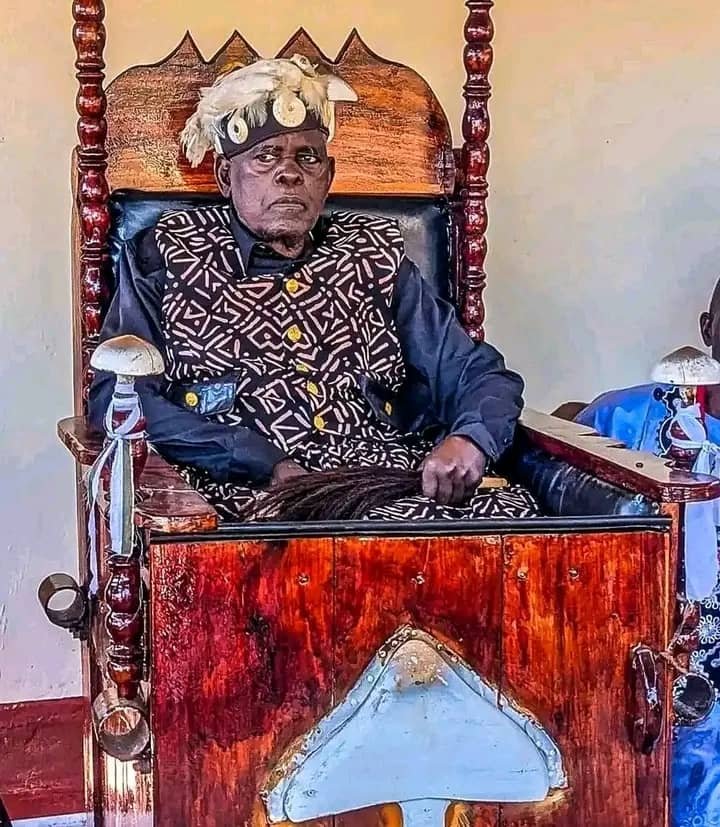
    His Royal Highness Senior Chief Kasempa, Mr Benson Mushitala, is installed, succeeding Samushi Mabende. In 2026 the chiefdom marks fifty years of his reign.

  7. Today

    A living authority

    Senior Chief Kasempa presides over the chiefdom from his palace, Lukena, near Kasempa Boma — one of Zambia's recognised senior chieftaincies and the traditional capital of the Kaonde-speaking people.

The dynasty

Those who have carried the Title

Every Chief of Kasempa carries the Honorific Title conferred on Jipumpu in 1882. The Establishment holds the following with certainty; the fuller roll of the dynasty is being assembled for the exhibition room, and additions are welcome.

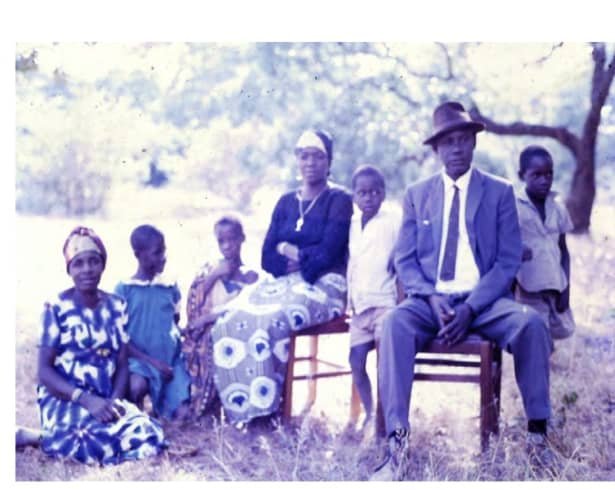
Senior Chief Kasempa, Samushi Mabende, seated with his family
Samushi Mabende Senior Chief Kasempa before the present reign, photographed with his family.
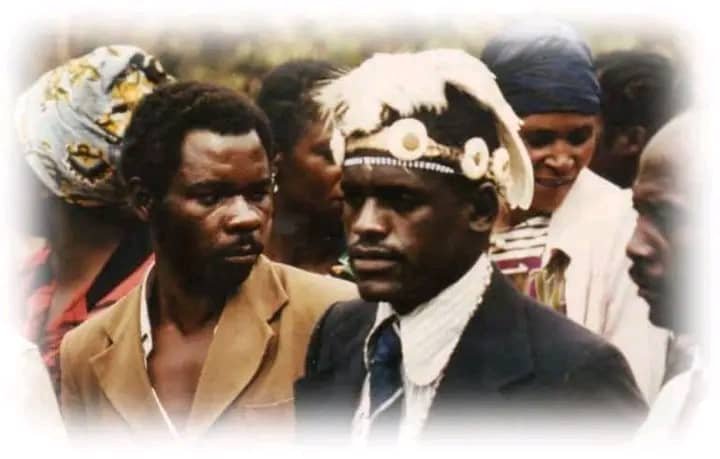
The installation of Senior Chief Kasempa, Mr Benson Mushitala, in 1976
Benson Mushitala Photographed at his installation as Senior Chief Kasempa in 1976. He reigns today.

The known line

  1. JipumpuFounded the capital at Kamusongolwa, 1882. Died 1905.
  2. KalushaNephew of Jipumpu. Inaugurated 1907.
  3. The intervening reigns are being compiled from the record
  4. Samushi MabendeReigned before the present Chief.
  5. Benson MushitalaInstalled 1976. Reigning.

Part two

The Swedes at Kasempa

In the first decade of the twentieth century a small number of Swedish traders, storekeepers and prospectors settled around Kasempa Boma. Two of them are bound permanently into the history of this chiefdom.

Wilhelm Frykberg

Known locally as Bwana Mecha

A merchant who ran a store at Kasempa for a time, and an active labour recruiter across North-Western Rhodesia. His company was stationed first at Cape Town and later at Johannesburg, and he held a farming enterprise in Mwinilunga District.

The record of him is not kind. Dr Dick Jaeger, who has written extensively on the Kasempa district, describes him plainly as "a brute and not an easy man" and "a rough person as a labour recruiter."
Niels A. Ohlund

Known locally as Bwana Chiyumbi

A Swedish storekeeper and electrician by training, who came to Africa in 1904. He worked a small gold mine at Shindamona, roughly twelve kilometres north of Kasempa Boma, and lived there in an isolated place.

He was employed by Frykberg. He was not the man the killers came for, and he is the man who died. He lies in the old European cemetery at Kasempa Boma, the oldest identified grave but one.

Part three

Shakutenuka, 1911 — 1912

The fullest account the Establishment holds, drawn from the correspondence of Dr Dick Jaeger and Mr Bright Kifita with the Royal Secretariat, and from the published record.

Frykberg recruited Kaonde men for the mines. Numbers of them did not come home. They died in the compounds and were buried far from this country, and where a recruiter would ordinarily have paid compensation to the family of a man who died in his service, in these cases nothing was paid at all.

Among the dead was the brother of a man called Tumiwa — recorded also as Tumila, and given in the Establishment's own records as Tuminwa Munkubula Shakutenuka. He resolved that the debt would be answered.

Frykberg could not be found. The party first attempted to kill one of the Europeans living at Kasempa Boma itself and failed there, the boma being too well peopled. They turned instead to Shindamona, twelve kilometres north, where Frykberg's employee lived alone. On 22 May 1911 they fired through the window of the house and killed Niels Ohlund.

The pursuit was led by the District Commissioner and magistrate of the day, Mr W. H. Hazell, who held the post from 1910 to 1912. It took several months. Tumiwa and his companions were finally taken in the region of the Kabompo river.

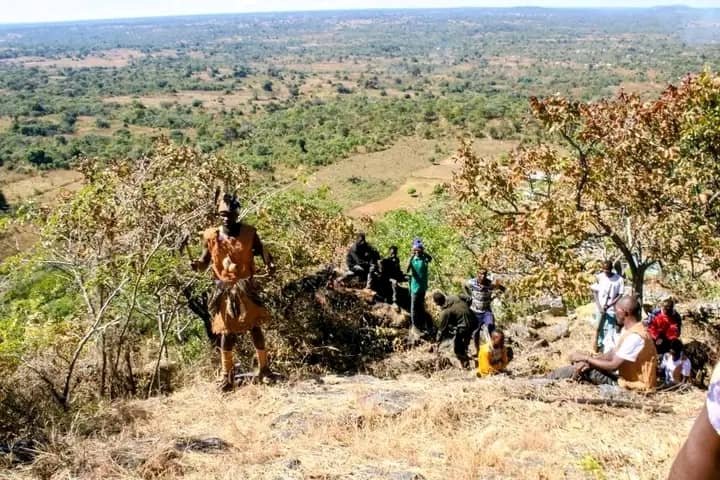
There was a court case at Kasempa Boma. Four people were hanged, in the presence of all the chiefs and headmen of the district — a public execution staged as a lesson to the chiefdom. The hanging place is still pointed out in Kasempa centre, near the Tamala resthouse.

Standing before his execution, Tumiwa did not deny what he had done. He confessed it publicly and without fear, and said plainly that the man he had gone for was Frykberg. For that he is remembered as Shakutenuka — the one who would not bow.

Among the Kaonde his story has never been told as a warning. It is told as courage — the measure of what the people of this chiefdom were willing to answer with when their sons were taken and did not return.

Where the accounts differ

This is a contested record and the Establishment sets out the differences rather than smoothing them over.

  • The mines. Dr Jaeger's account places the deaths at the mines at Bulawayo. The Kaonde Archives record recruitment for the Rand mines, some four hundred men between 1909 and 1910, of whom close to a hundred died of pneumonia.
  • The number hanged. Dr Jaeger records four hanged. The Kaonde Archives name three men — Tumiwa, Tapoka and Kungwa.
  • Ohlund's name. Given as Niels A. Ohlund in the cemetery record and the district notebook; as Albert Ohlund in other accounts.
  • The year. The killing is dated 1911 in the cemetery record and in most accounts; one letter gives 1910.

Part four

The old European cemetery, 1911 — 1961

It lies in the bush behind the newer houses near the junction of the Kasempa main road and the road to Kaoma. It is severely dilapidated and stands without a fence. It is over a hundred years old. Both the Kasempa District Council town planner and the National Heritage Conservation Commission know that it is there.

The names below are transcribed from the map in the Kasempa District Note Book, page 143, held at the Zambia National Archive in Lusaka, in a draft compiled by Dr Dick Jaeger in September 2015. The order follows the map itself, which is neither alphabetical nor chronological; the reason for the sequence is not known. Spellings are as they could be read from the photocopy and are not in every case correct.

The oldest grave is from 1908. Corrections and additions are welcome, and should be sent to the Royal Secretariat.

  1. T. Stainton
  2. L. H. Sarcast, N.R. Police
  3. N. A. Ohlund, 1911 — Swedish
  4. R. D. Munro
  5. G. E. Skoglund, 1916 — Swedish
  6. Mrs H. C. Dollman, 1926 — British, wife of a colonial administrator
  7. G. O. Parke — Scottish
  8. C. W. Hammer Ron, MC
  9. H. Burden, 26 October 1926
  10. Hennk Stiersped, 22 November 1927 — Swedish
  11. Edwijn Noven, 29 March 1957
    Patricia Mary Tweedy, "Tishy", 5 March 1943 · Agensmas
  12. V. H. Magee, 16 January 1961 — British colonial administrator

Part five

The reconciliation, 2021 — 2023

A hundred and ten years after the hangings, the granddaughter of Wilhelm Frykberg wrote to the Kasempa Royal Establishment. What followed is one of the better things to have happened in the recent life of this chiefdom.

  1. 15 April 2021

    The first meeting

    Kate Frykberg, granddaughter of Wilhelm Frykberg, and her husband Dave Moskovitz, both of New Zealand, convene a first meeting to discuss reconciliation and reparation in view of the events of 1911 and 1912.

  2. 28 May 2022

    The letter of apology

    A letter of apology from Kate Frykberg is delivered to His Royal Highness Senior Chief Kasempa at Lukena, in the presence of members of the royal household and the Chief's personal secretary Mr Harriwell Lubinga. It is carried by Mr Bright Kifita and Mr Arie de Kwaasteniet. With it comes an offer to support a charitable initiative in Kasempa. Both the letter and the emissaries are well received, and words of reconciliation are sent back to the Frykberg family.

  3. July 2022

    The Chief accepts

    Senior Chief Kasempa writes an official letter accepting the apology and granting permission for the proposed works in Kasempa to proceed.

  4. August 2022

    The Aotearoa Zambia Fund

    Kate Frykberg and Dave Moskovitz establish a charity fund through which three projects are sponsored: the Shakutenuka Historical Plaque, the Shakutenuka Borehole, and a Kikaonde dictionary.

  5. 8 June 2023

    The plaque and the borehole

    Kasempa District Commissioner Mr Hayden Songezha unveils and commissions the Shakutenuka Historical Plaque and the Shakutenuka Borehole. The ceremony was to have been held on 4 June and to have been performed by the Minister of Labour; the death of a senior Chief of the Kaonde moved the date, and the Minister's departure for the International Labour Conference in Geneva moved the office.

The order of the day

The commissioning party went, in this order:

  1. To the burial site of Shakutenuka and his companions
  2. To the European graveyard, where the earliest Swedish settlers in Zambia lie
  3. To Shakutenuka's village, to commission the borehole
  4. To the historical site, to unveil the plaque

Shakutenuka's great-granddaughter Joyce spoke at the cemetery. Kate Frykberg's speech was played to the gathering as an audio recording. Sub-chiefs attended and were addressed. The people of the village expressed their joy at the opening of the borehole.

The project was brought about in consultation with the Kasempa Royal Establishment, the Member of Parliament for Kasempa, the National Heritage Conservation Commission, the Kasempa District Council, and the Mateyo family, on whose land the historical site stands. It was covered by the Zambia News and Information Services and by the Kaonde Service of the Zambia National Broadcasting Corporation, and broadcast on national television on 19 June 2023.

Ongoing

An exhibition room at the Palace

The Kasempa Royal Establishment is working to create an exhibition room at the Palace to hold the historical record of Kasempa — the documents, the photographs, the testimony and the objects that carry this chiefdom's memory.

Much of what is on this page exists because people took the trouble to write it down and to send it here. The Establishment is grateful to Dr Dick Jaeger for his research on the district and its cemetery, and to Mr Bright Kifita, whose work on Kaonde culture, identity and history in the Kaonde Archives has recovered a great deal that would otherwise have been lost.

If you hold a document, a photograph, a letter or an account that belongs to the history of Kasempa, the Royal Secretariat would like to hear from you. Corrections to anything on this page are equally welcome.

Write to the Secretariat
The installation of Senior Chief Kasempa, Mr Benson Mushitala, in 1976
The installation of His Royal Highness Senior Chief Kasempa, Mr Benson Mushitala, 1976.

The published record

Where this history is written down

The Shakutenuka account is treated at length in the following. A detailed account is given in the first.

  • Chibanza, S. J.Kaonde History, in Central Bantu Historical Texts, Rhodes-Livingstone Institute, Lusaka, 1961, p. 71.
  • Short, R.African Sunset, Johnson, London, 1973, p. 28.
  • Grimstvedt, S. — "The Swedish Settlement in the Kasempa District", Northern Rhodesia Journal, 1956, 3(1), p. 34.
  • Kakoma, B. C.Local Politics in the North Western Province of Zambia, unpublished PhD thesis, University of Sussex, 1977.
  • Kasempa District Note Book, p. 143 — Zambia National Archive, Lusaka. The cemetery map and burial roll.
  • Kaonde Archiveskaondewordpress.wordpress.com, on Shakutenuka, on Kasempa, and on the life of Wilhelm Frykberg.

Correspondence between Dr Dick Jaeger, Mr Bright Kifita and the Kasempa Royal Establishment, 2022 — 2023, held by the Royal Secretariat. See also our full references.